
projects
52% of projects don’t deliver on their original goals - here’s why it’s happening to you
How vague scoping and misaligned communication derail project goals, and why SMART requests reduce misunderstandings.
“That’s so not what I meant” - have you ever thought this? I have, more times than I’d like to admit. And not just in my private life, but also AT WORK.
Whenever I asked colleagues to do something for me and they delivered something different. Or they delivered late, without realising they were late. In just a few seconds, countless examples come to mind.
Sound familiar?
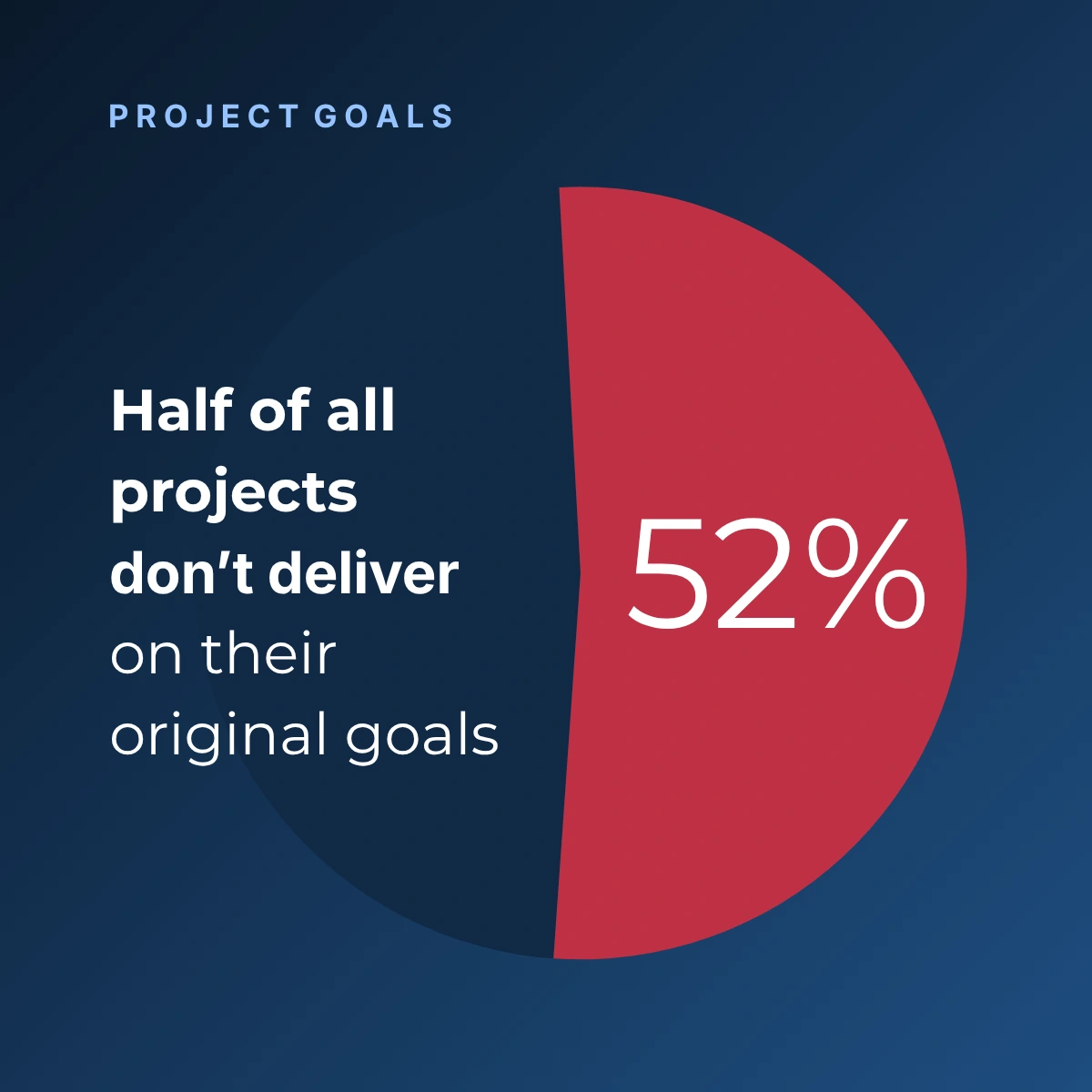
You and I are not alone. The Project Management Institute notes that 52% of projects don’t deliver on their original goals, largely due to vague scoping or misaligned communication around the individual deliverables.
Misunderstandings are such a fundamental problem of human collaboration that it has been addressed with countless techniques since the dawn of civilisation.
The whip used to be very popular, from the literal one of the ancient Egyptians, to the figurative one of the toxic office cultures of the 1980’s. Thankfully, the office world has now evolved to provide corporate welfare, free snacks, and AI that does the work while you play ping-pong in the office or wait for your sourdough bread to rise at home.
Against this new backdrop, collaboration techniques have stopped focusing on coercion, in favour of clarity and empowerment. Today, we will talk about one such technique that is as famous as it is misunderstood.
SMART goals and why they are misunderstood (hint: SMART doesn’t mean easy)
SMART goals are an example of a very successful acronym: easy to remember, short and clever (no pun intended).
Sadly, applying it correctly is easier said than done. But fear not: after teaching hundreds of professionals how to leverage this powerful tool, I will introduce you to the simple steps to never get it wrong again.
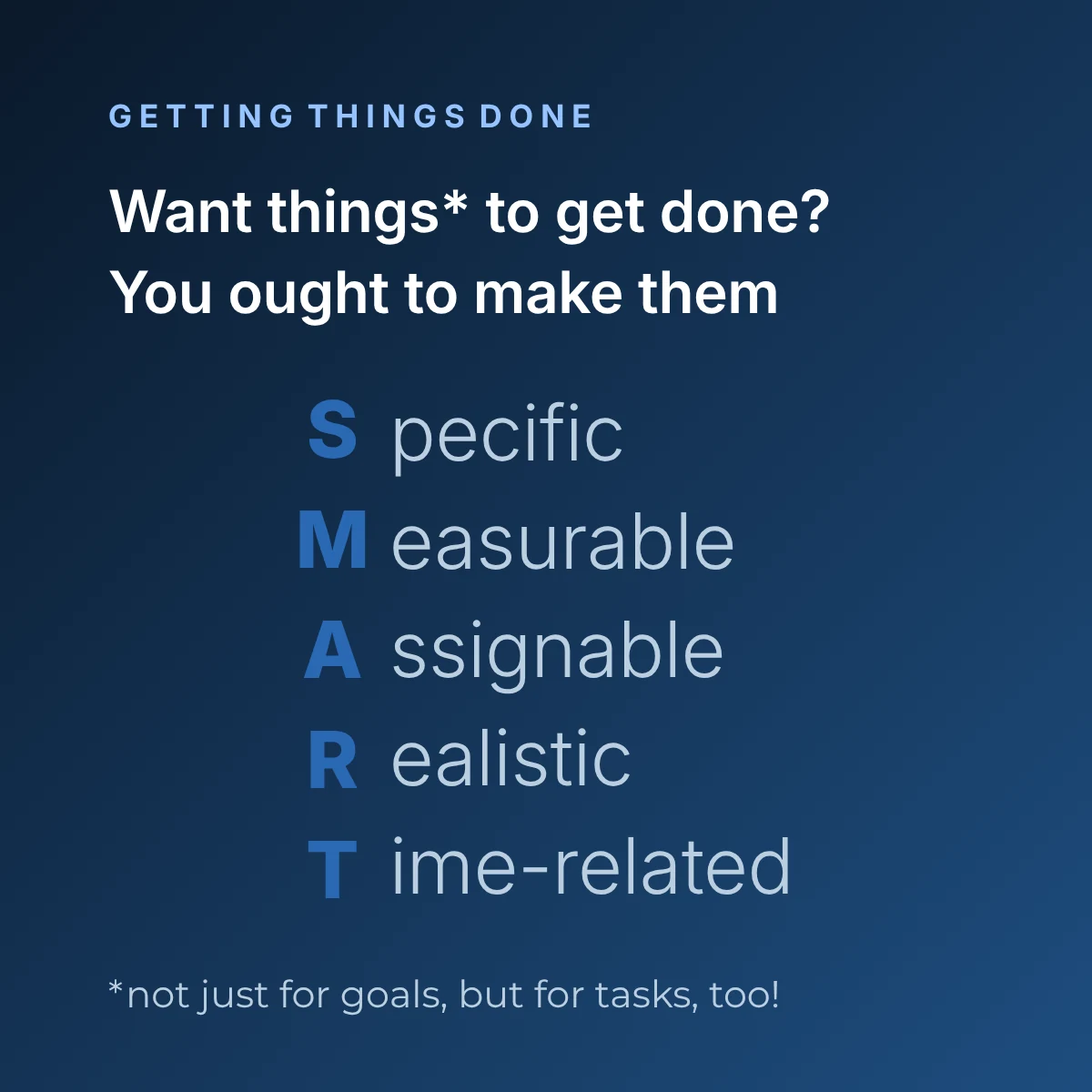
First, the definition* - SMART stands for:
- Specific: clear, without room for interpretation
- Measurable: success or failure can be determined beyond any doubt
- Assignable: responsibility can be defined clearly
- Realistic: attainable with the available resources
- Time-related: there is a clear deadline
* (This is the nomenclature used by George T. Doran, who originated this framework in 1981; many variations exist nowadays, but the meaning is the same - definitions are my own)
How a lot of people apply this framework completely WRONG
Hands up if you’ve ever received an email or a Slack like this:
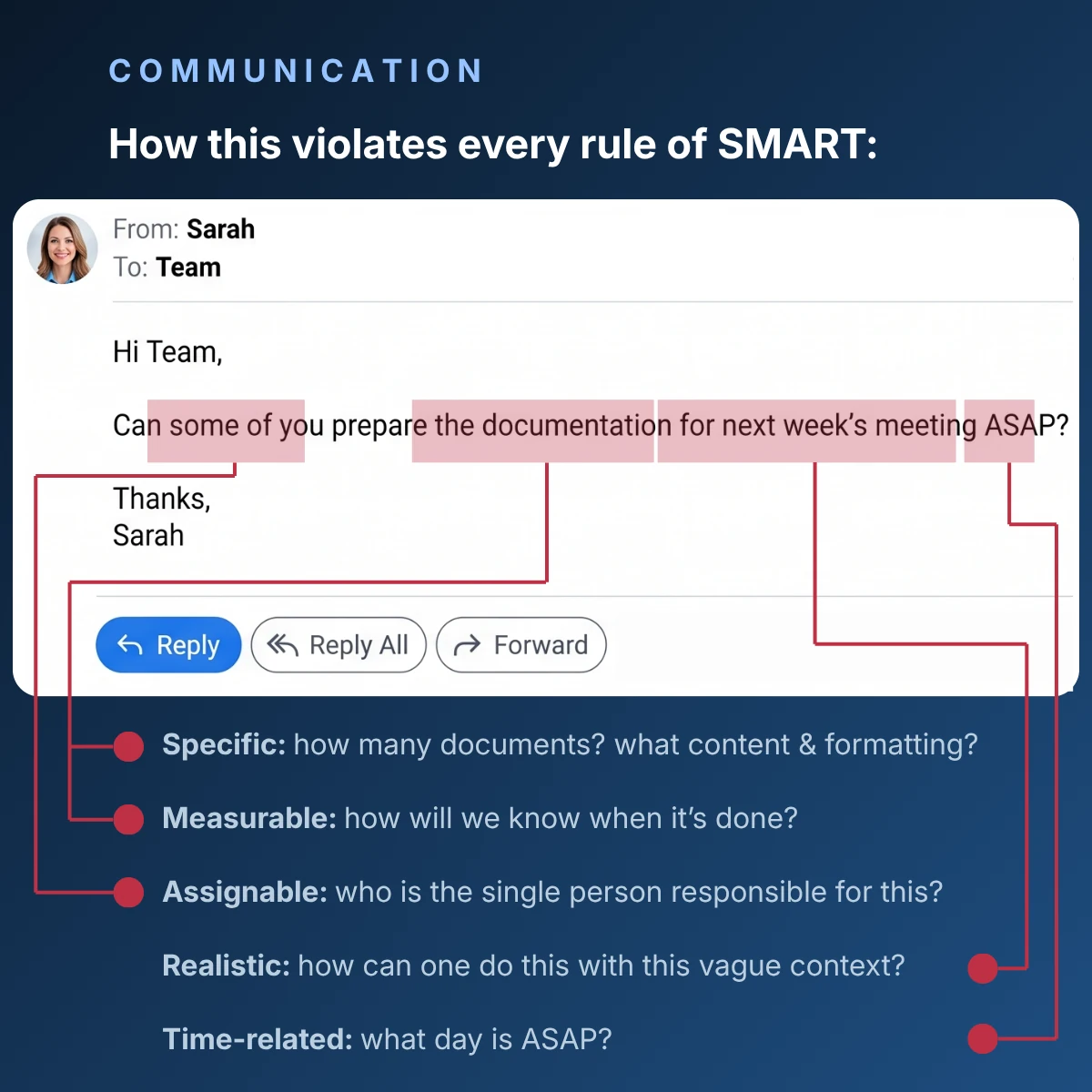
“Hi Team, can some of you prepare the documentation for next week’s meeting ASAP? Thanks”
Time for some FAQs:
1. What’s wrong with this message?
It violates ALL of the SMART goal rules (picture below says how)
2. But wait, why talk about SMART, since this is not a goal?
To avoid misunderstandings and ensure smooth collaboration, every request to another human (or AI) should be SMART. Hence it will help to think of it as a goal - with a deliverable.
3. Surely you’re exaggerating, nobody can violate all the rules in just one message.
You tell me, have you never received a message like this before?
4. What can go wrong after sending a message like this?
Everything :) The sender is running all of the following risks:
- Specific: the sender does not receive all the documents s/he had in mind
- Measurable: only part of the documents is provided, as the person providing them doesn’t know when s/he has finished the job
- Assignable: nobody does this, since no individual was named - shared responsibility is no responsibility
- Realistic: ok fine, we don’t have enough context to know whether this rule was broken - glad you’re paying attention :)
- Time-related: a well-meaning team member sends the documents the day before the meeting - but maybe it’s too late because the sender needed them earlier, so s/he could verify whether anything is missing, use the docs to prepare, etc
One final note: this message could be sent by a manager or even by a peer - human communication rules apply to everyone and anyone can break them.
How you can apply this framework completely RIGHT
I’m glad you asked! Our next article will show you how rewriting that exact Slack message takes 10 extra seconds but saves 10 hours of rework.

Do you have a critical project you can’t afford to fail?
Let us help you get certainty, remove roadblocks, and deliver on time.
Get new best practices in your inbox
Broken processes drag down your work. Get our best techniques delivered to you regularly, so you can finish your projects on time and without the chaos.