
delegation
Why "asking them" isn't enough: the art of workplace alignment
Why a request is only the first half of workplace communication, and how explicit written commitment keeps work on track.
“Why isn’t this done, haven’t you seen my email?”
If I had a penny for every time I’ve heard this line. I certainly wouldn’t be writing this blog right now. But here we are - many pennies short but passionate about putting an end to human misunderstandings. When it comes to projects and work collaboration, at least.
Here’s the deal:
- 52% of all projects don’t deliver on their original goals, mainly due to misunderstanding (you can read more here)
- The SMART technique lets you delegate requests that are impossible to misunderstand (you can read more here)
But even when the sender’s pen is sharp and clear, what of the receiver? Will s/he reject? Or push back on the deadline?
Or - goodness forbid - overlook our request?
We can’t control other people, but we can control how we deal with them. Starting with a long overdue reckoning (it will feel good, I promise).
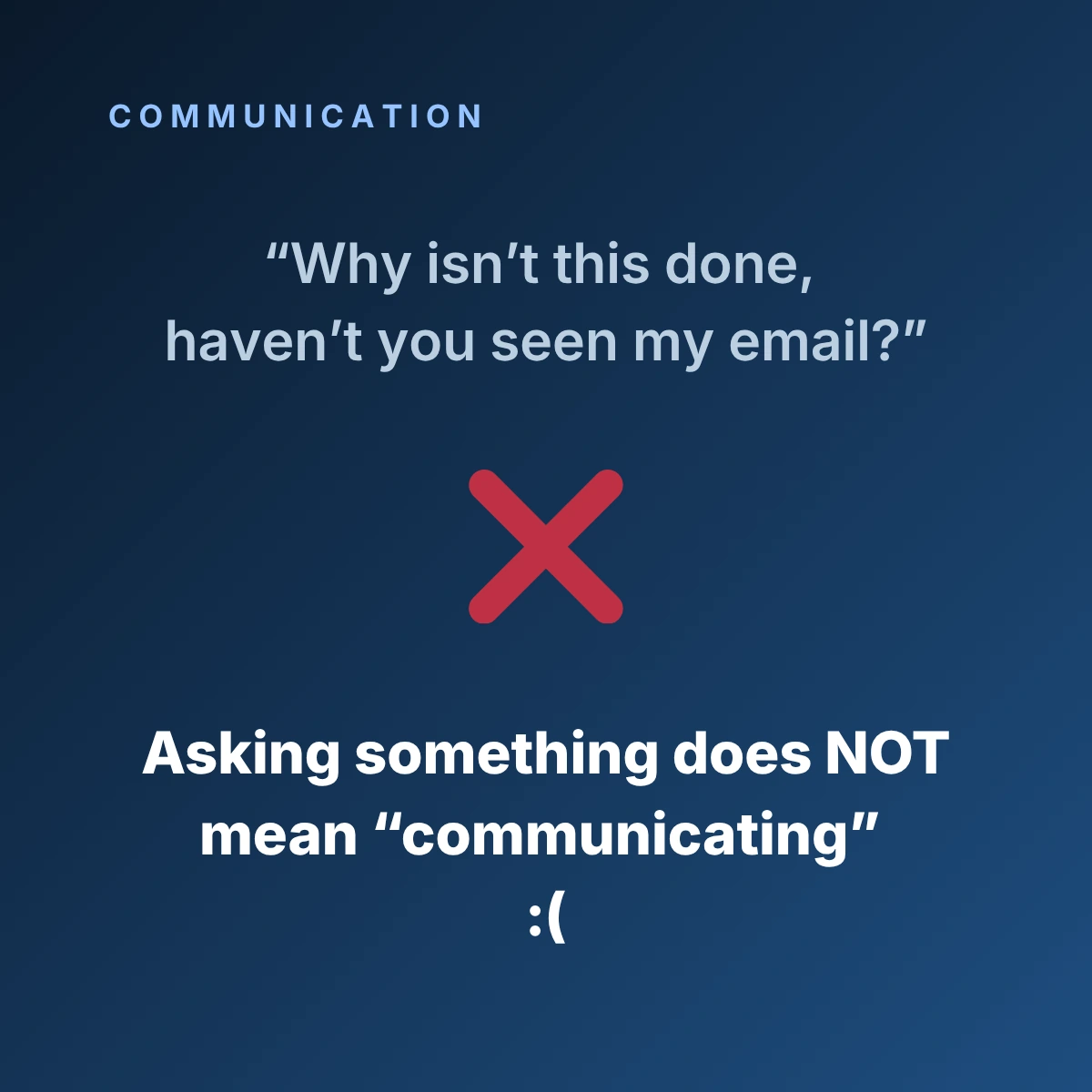
“Asking” something doesn’t mean “communicating”
Let’s stop lying to ourselves: just because we have asked something of someone, it doesn’t mean we’ll get it. It seems obvious, but work behaviour often contradicts this basic principle. We send emails and then wait too long to chase the recipient for an answer.
Communication is a two-way street. Asking someone is the first half. We also need their commitment to do what we ask, and to do it on time.
If they don’t offer it, then we haven’t communicated - we have simply thrown words in the wind.
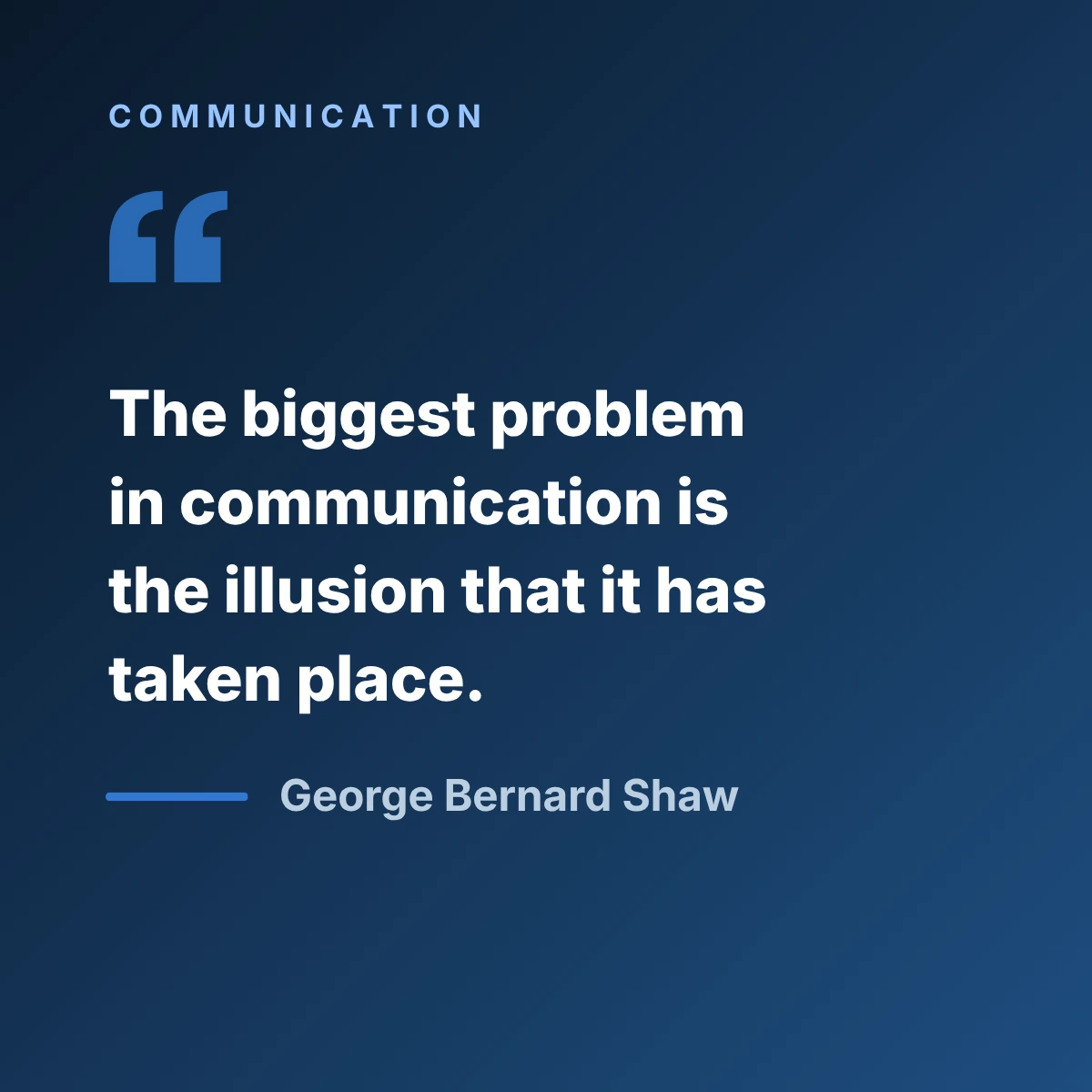
The single biggest problem in communication is the illusion that it has taken place.
- George Bernard Shaw
That’s why you can’t rest assured your projects will stay on track, unless you get explicit agreement from others that they will do what you asked. And you need that agreement in writing.
Contracting: why writing was invented

Long before you could tweet your latest poem while tipsily singing along to your favorite punk rock refrain, writing was invented for much less artistic reasons.
People needed to remember stuff. More precisely, according to historian Yuval Noah Harari’s award winning book “Sapiens”, it was invented to keep track of who paid taxes.
Written contracts followed shortly after. They were not invented so that we could sue someone, but rather to ensure two people remembered the details of what they had agreed.
So for every deliverable that you delegate you need a written record of 2 things:
- The request - written using the SMART technique
- The recipient’s explicit agreement to the details - and the deadline - of that request
This is called “contracting”, it’s not literally a legal thing, but it’s the basis to know who has committed to do what, by when - and who hasn’t.
What if the recipient doesn’t agree?
Sometimes you may not get your way. Annoying, I know. But I argue it’s better to know upfront rather than when it’s too late.
So let’s address each of these possible scenarios.

1. The recipient flat-out rejects the request
Rare. But it can happen if the recipient isn’t the right person for the job or is really slammed. Or some people always reject requests due to ummm… personality? Either way, the outcome is the same :)
How to handle: Don’t take it personally, but do ask a clarifying question. If s/he isn’t the right owner, find out who is. If it’s a capacity or a personality issue, escalate to unblock this person or find someone else. In any case, you might learn something useful for the next time.
2. The recipient proposes a different deadline
Not a bad sign - it proves they read the request and are taking the timeline seriously!
How to handle: Say yes if it doesn’t break your project. Maybe you had already built a buffer in your request (smart), or maybe there is something else you can do to mitigate this delay.
If however this specific deadline is critical, negotiate with tact. Maybe just a part of the scope is truly urgent while the rest can be done later. Or maybe you just need to empathetically ask to “do me a big favour”.
In these cases, it’s best to reward the recipient’s helpfulness and seriousness, rather than being too pushy.
3. The recipient doesn’t acknowledge the request
The trickiest case. They might be on it and you don’t want to be seen as overbearing - but you need to know. As long as you’re gentle and you explain that you are only checking because you wanted to ensure they saw it, you’re just doing your job.
How to handle: After a reasonable grace period (24-48 hours for non-emergencies), send a polite nudge in the same thread: ‘Hi Bob, just making sure you saw this, let me know if this is something you can do by Friday at 5pm!’
It’s friendly, professional, and unreasonable to resent.
4. The recipient accepts the request
The golden scenario! S/he replied with a clear “Yes, I’ll get this to you by Friday at 5 PM.”
How to handle: Pop the champagne!
Can people accept and then change their mind?
I wish I could give you a different answer but… yes, of course they can. And they will more often than you’d like.
But fortunately, there are techniques and tools you can use to manage such situations and keep your projects on track. They will be the focus of the next article.

Do you have a critical project you can’t afford to fail?
Let us help you get certainty, remove roadblocks, and deliver on time.
Get new best practices in your inbox
Broken processes drag down your work. Get our best techniques delivered to you regularly, so you can finish your projects on time and without the chaos.